






Introduction
Nepal, a land where the Himalayas kiss the sky and ancient traditions weave through vibrant cultures, is a beacon for adventurers and soul-searchers alike. In 2025, this Himalayan nation continues to captivate with its towering peaks, serene valleys, and spiritual sanctuaries, offering experiences that challenge the body and enrich the spirit. From trekking to Everest Base Camp to plunging off the Bhote Koshi Bridge in a bungee jump, Nepal’s adventures demand courage—a leap of faith that transforms travelers. This article explores the thrilling adventures Nepal offers, the cultural and spiritual depth that amplifies them, and how these experiences embody the philosophical and personal act of taking a leap of faith, drawing on real stories, expert insights, and the allure of Nepal’s landscapes.
Nepal: A Land of Adventure and Wonder
Nestled between India and China, Nepal is home to eight of the world’s ten highest peaks, including Mount Everest, and a rich tapestry of Hindu and Buddhist heritage. With 12 national parks, UNESCO World Heritage Sites like Kathmandu Durbar Square, and a diverse population of ethnic groups such as Sherpas, Tamangs, and Newars, Nepal is a melting pot of nature and culture. In 2025, tourism thrives, contributing significantly to the economy, with over 1.2 million visitors annually, per Nepal Tourism Board data. The country’s accessibility, with improved infrastructure and eco-conscious operators like Nepal Eco Adventure, makes it a top destination for adventure travel.
Adventures in Nepal are not just physical feats; they are journeys of self-discovery, requiring travelers to trust in the unknown—whether scaling a mountain or embracing a new culture. The concept of a “leap of faith,” as philosopher Søren Kierkegaard described, involves moving from one state to another without certainty, driven by belief or courage. In Nepal, this leap manifests in both literal and metaphorical ways, from bungee jumping to forging connections in remote villages.
Thrilling Adventures in Nepal
Nepal’s diverse terrain offers a playground for adrenaline junkies and nature lovers. Below are some of the most iconic adventures that define the country’s allure in 2025.
1. Trekking the Himalayas: A Journey to the Roof of the World
Trekking is Nepal’s crown jewel, with routes like the Everest Base Camp (EBC) and Annapurna Base Camp (ABC) drawing adventurers worldwide. The EBC trek, a 12–14-day journey to 5,364 meters, offers breathtaking views of Everest and insights into Sherpa culture. The ABC trek, a 7–10-day adventure, immerses trekkers in the Annapurna range’s dramatic landscapes. In 2025, operators like Discovery World Trekking ensure safety with experienced guides like Santosh, who monitor oxygen levels and navigate challenging conditions, such as winter snows on Thorong La Pass.
Trekking requires a leap of faith—trusting your guide, your stamina, and the unpredictable weather. A 2025 X post by @vincentschnabl recounts a 19-day trek covering 300 kilometers, crossing glaciers and 5,600-meter passes, describing it as life-changing. Such journeys test physical limits while fostering resilience and awe.
2. Bungee Jumping and Canyon Swinging: Defying Gravity
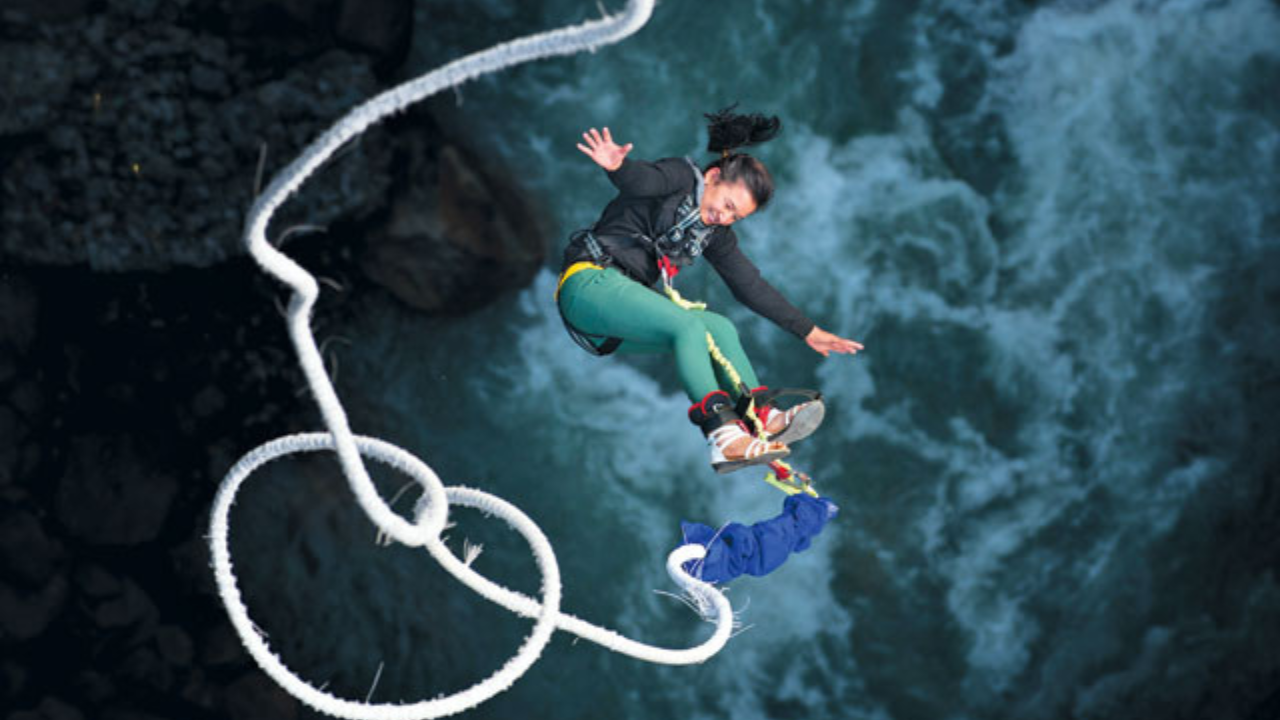
For those seeking an adrenaline rush, the Bhote Koshi Bridge at The Last Resort offers one of the world’s highest bungee jumps at 160 meters. This leap, as described in a 2007 Himalayan Times article, saw visually impaired Nepalis take the plunge, proving that courage transcends limitations. The canyon swing, with a 100-meter free-fall at 150 km/h, is equally thrilling, offering a heart-pounding dance with gravity.
A traveler’s account on ECS Nepal captures the moment: eyes shutting reflexively, body surrendering to the fall, and the exhilaration of bouncing back. These acts embody a literal leap of faith, requiring trust in equipment and crew. In 2025, The Last Resort’s professional operations ensure safety, making it a bucket-list experience.
3. Paragliding in Pokhara: Soaring with the Himalayas
Pokhara, Nepal’s adventure capital, is renowned for paragliding, dubbed “the best paragliding venue on the globe.” Soaring past Annapurna’s snowcapped peaks with Lake Phewa below, paragliders experience freedom and serenity. In 2025, tandem flights with certified pilots make this accessible to beginners, though safety is critical, as paragliding accidents have occurred due to lax standards. Choosing reputable operators like Alpine Ramble Treks mitigates risks.
Paragliding demands a leap of faith—trusting the pilot and the winds. A 2025 X post by @MazzaBreno describes the surreal beauty of Pokhara’s skies, highlighting how such moments linger long after the flight.
4. White-Water Rafting and Kayaking: Taming Wild Rivers
Nepal’s rivers, like the Trishuli and Bhote Koshi, offer world-class white-water rafting and kayaking through gorges and rapids. These adventures combine adrenaline with stunning scenery, but they require caution, as rivers can be unpredictable. In 2025, operators provide safety gear and trained guides, ensuring thrilling yet secure experiences.
Rafting embodies a collective leap of faith, as teams trust each other to navigate rapids. The camaraderie built on these rivers, as noted by travelers, fosters lasting bonds.
5. Wildlife Adventures in Chitwan National Park
Chitwan National Park, a UNESCO World Heritage Site, offers jungle safaris, elephant rides, and canoe trips to spot Indian rhinos, tigers, and crocodiles. In 2025, eco-tourism initiatives protect the park’s 400 rhinos and 50+ animal species while providing immersive experiences. Guided tours, often atop elephants, offer a unique perspective, though ethical considerations around animal welfare are gaining attention.
Venturing into Chitwan requires a leap of faith—trusting guides to navigate wild terrain and embracing nature’s unpredictability. The reward is a profound connection with Nepal’s biodiversity.
Cultural and Spiritual Adventures: A Deeper Leap
Nepal’s adventures extend beyond physical thrills to cultural and spiritual immersion, where the leap of faith is emotional and philosophical.
1. Exploring Kathmandu’s Spiritual Heart
Kathmandu, a vibrant capital, is home to UNESCO sites like Boudhanath Stupa and Pashupatinath Temple. Boudhanath, a hub for Tibetan Buddhism, sees devotees circling the stupa, spinning prayer wheels, and chanting “Om Mani Padme Hum.” Pashupatinath, a sacred Hindu temple, hosts rituals along the Bagmati River, offering a raw glimpse into life and death. A traveler named Stefan, in a 2025 Intrepid Travel account, describes sitting with the culture shock at Pashupatinath, choosing to absorb rather than question—a leap of faith in understanding.
Visiting these sites requires openness to unfamiliar beliefs, fostering global spirituality. In 2025, guided tours like Intrepid’s Spiritual Nepal Experience provide context, enriching the experience.
2. Celebrating Festivals: Joining Nepal’s Cultural Tapestry
Nepal’s festivals, like Lhosar (Tibetan New Year) and Holi, invite travelers to participate in vibrant traditions. Lhosar, celebrated by Sherpas and Tamangs, features feasting and dancing, marking a cultural leap of faith as visitors join local festivities. Holi, with its colorful powder-throwing, encourages letting go of inhibitions, though tourists are advised to wear old clothes to avoid unwanted dousing.
Participating in festivals requires embracing the unknown, as travelers integrate into communal joy. A 2025 X post by @travelogy highlights Nepal’s cultural magic, urging visitors to dive into such experiences.
3. Volunteering and Mission Work: Serving with Purpose
Nepal’s remote villages offer opportunities for volunteering, from teaching English to building churches, as seen in the Harding family’s story. After sponsoring Nepali children, they felt called to rebuild communities post-2015 earthquake, a leap of faith driven by faith and compassion. Organizations like The World Race facilitate such missions, connecting volunteers with locals through soccer camps or evangelism.
Volunteering demands trust in the impact of small actions, offering profound personal growth. These experiences, as shared on X, transform perspectives and forge lifelong connections.
Taking a Leap of Faith: Personal Transformation
The leap of faith in Nepal is both literal—like bungee jumping—and metaphorical, as travelers confront fears, embrace uncertainty, and discover resilience. Susan Sparks, a former attorney, found healing in Nepal’s Buddhist monasteries during a global spiritual quest, overcoming burnout to become a minister. Similarly, a blogger on The Grey Badass recounts surviving on $100 in Nepal, watching sunrises over Everest, and realizing their potential despite personal hardships.
In 2025, Nepal’s adventures inspire such transformations. A 2025 X post by @duke_prez reflects on a 2000 trek to Imja Tse Himal, noting its profound life-changing impact. These stories echo Kierkegaard’s idea of a qualitative leap—shifting from fear to faith, from routine to purpose.
Practical Tips for Adventures in Nepal
To embark on Nepal’s adventures, preparation is key:
- Choose Reputable Operators: Select companies like Nepal Eco Adventure or Himalayan Adventure Rising for safety and local expertise. Verify credentials to avoid inexperienced guides.
- Prepare Physically and Mentally: Train for treks with cardio and strength exercises. Practice mindfulness to embrace uncertainty, especially for high-altitude or adrenaline activities.
- Respect Culture: Learn basic Nepali phrases and dress modestly, especially at religious sites. Engage respectfully during festivals.
- Ensure Safety: Check travel advisories, like Smartraveller’s, for health risks (e.g., altitude sickness, waterborne diseases) and safety concerns (e.g., protest risks). Secure travel insurance covering medical evacuation.
- Pack Smart: Bring layered clothing, sturdy boots, and gear like sleeping bags (rentable from operators). Carry legal medications with prescriptions.
Challenges and Considerations
Adventures in Nepal come with challenges. Altitude sickness above 2,500 meters requires acclimatization and medical advice. Limited medical facilities outside Kathmandu necessitate robust insurance. Cultural differences, like open cremations at Pashupatinath, may evoke culture shock, requiring openness. Safety risks in adventure sports demand vetted operators, as paragliding and rafting accidents have occurred. Environmental concerns, such as overtourism in the Himalayas, call for eco-conscious travel.
Despite these, Nepal’s rewards—stunning landscapes, warm hospitality, and personal growth—outweigh the risks, as affirmed by travelers on X.
Conclusion
Adventures in Nepal in 2025 are more than thrilling escapades; they are leaps of faith that challenge, transform, and inspire. Whether trekking to Everest Base Camp, bungee jumping at Bhote Koshi, or joining Lhosar celebrations, travelers embrace the unknown, finding courage and purpose. Nepal’s blend of natural splendor, cultural richness, and spiritual depth creates a canvas for unforgettable experiences, as shared by adventurers like @MazzaBreno and @Thirdeyeadv on X. By preparing wisely and respecting local traditions, you can take your own leap of faith, discovering not just Nepal’s wonders but also your own resilience. In the shadow of the Himalayas, where faith meets adventure, Nepal awaits to change your life—one courageous step at a time.