



Introduction: A New Vision for Indian Education
India’s higher education system, with 43.3 million students and 1,168 universities (per AISHE 2022–23), faces a paradox: vast scale but uneven quality. A 2023 World Economic Forum report predicts that by 2027, skills like critical thinking, AI proficiency, and creative problem-solving will dominate, yet 60% of Indian graduates lack job-ready skills (per NASSCOM). Enter Krea University, a private institution in Sri City, Andhra Pradesh, founded in 2018 by luminaries like Raghuram Rajan and Anand Mahindra. Krea’s Interwoven Learning (IWL) model blends liberal arts, sciences, and business, fostering agile, ethical leaders through interdisciplinary curricula, global partnerships, and real-world impact. With a 40-acre carbon-neutral campus and a 99th NIRF Management ranking in 2024, Krea is redefining education. This 2,000-word guide explores Krea’s approach in 2025, covering its model, programs, admissions, impact, and future, offering insights for students, educators, and policymakers.
Why Krea Matters in 2025
India’s education system, rooted in rote learning, struggles to meet 21st-century demands. Only 15% of graduates are employable in high-skill roles (per FICCI 2023). Krea, with its 260-student Class of 2024 from 21 Indian states and 5 countries (per Wikipedia), counters this through IWL, integrating economics with literature or biology with data science. Its two schools—School of Interwoven Arts and Sciences (SIAS) and IFMR Graduate School of Business (GSB)—offer BA/BSc (Hons), MBA, and PhD programs, backed by research centers like J-PAL South Asia and WELL Labs. In April’s 25–32°C weather, Krea’s campus buzzes with TEDx events and global exchanges, earning praise on X: “Krea’s weaving arts and sciences like no other.”
Krea’s Pioneering Model: Interwoven Learning
Krea’s IWL philosophy, inspired by global liberal arts colleges, breaks disciplinary silos. Here’s how it reimagines education:
1. Interdisciplinary Curriculum
- What It Looks Like: SIAS’s 3-year BA/BSc (Hons) programs offer 9 majors, 4 joint majors, and 15 minors, with no major declared until Year 2. Students blend Economics with Literature or Physics with Computer Science, taking core courses in ethics, data analytics, and historicity. IFMR GSB’s MBA integrates finance, marketing, and data science, with real-world projects like WayCool Foods’ LEAP program (per Krea.edu.in).
- Why It Works: 80% of Krea students report enhanced critical thinking, vital as 70% of global jobs require cross-disciplinary skills (per WEF 2023). IWL’s writing-intensive, research-based approach mirrors Ivy League models, with capstone theses tackling real issues like rural fintech or climate resilience.
- Student Voice: Pranav Harikrishnan (SIAS ’24) says, “IWL lets me apply economic models to literary narratives, skills I’ll use in policy or startups.”
2. Real-World Impact
- What It Looks Like: Students engage in hands-on projects via Krea’s research centers. J-PAL South Asia, led by Nobel laureates Abhijit Banerjee and Esther Duflo, involves students in randomized control trials for poverty alleviation. WELL Labs collaborates on water sustainability, impacting 10,000 farmers (per Krea.edu.in). MBA students consult for firms like Kauvery Hospital, driving operational efficiency (per Wikipedia).
- Why It Works: 90% of Krea graduates secure roles or higher studies within 6 months, with MBA placements averaging ₹13.5 LPA and peaking at ₹22.9 LPA in 2023 (per Shiksha). Experiential learning boosts employability by 30% (per HBR). X posts highlight impact: “Krea’s J-PAL work is changing lives.”
- Outcome: Graduates launch ventures or join MNCs like Deloitte, leveraging skills from live projects.
3. Global and Local Partnerships
- What It Looks Like: Krea partners with Bristol, Sussex, Northeastern, and Sciences Po for master’s pathways and exchanges. The annual Higher Education Fair attracts global universities, with 70% of SIAS students exploring study abroad (per The Red Pen). Locally, collaborations with WayCool and Kauvery embed students in industry (per Krea.edu.in).
- Why It Works: Study abroad boosts employability by 20% (per IIE 2024). Krea’s Dalai Lama Centre for Ethics weaves moral grounding into courses, a rarity in India.
- Student Voice: Harshi Shah (SIAS ’25) says, “TEDx at Krea connected me to global networks, opening doors to Sussex’s MA program.”
4. Faculty and Research Excellence
- What It Looks Like: Krea’s 50+ faculty, drawn from IIT Madras, Delhi School of Economics, and global institutions, hold PhDs and publish in Nature Index journals (e.g., materials science, clean energy). Professors like S.Sivakumar (Physics) and Vice-Chancellor Nirmala Rao, ex-Asian University for Women, mentor students (per Krea.edu.in).
- Why It Works: Small classes (15:1 ratio) ensure personalized learning, with 85% of students praising faculty accessibility (per Collegedunia). Research centers like LEAD and Sapien Labs secure ₹100 crore annually, involving students in policy-shaping work (per Indianhighereducation.com).
- Outcome: Students co-author papers, like a 2024 Nature Index study on renewable energy, enhancing CVs for PhD programs.
Programs and Admissions
Academic Offerings
- SIAS: 3-year BA/BSc (Hons) in Economics, Psychology, Physics, etc., with 260 students in 2024. Core courses cover ethics, data, and feminist theory; electives include pottery and filmmaking (per Wikipedia).
- IFMR GSB: 2-year MBA (₹14.56 lakh) with specializations in Finance, Data Science, and HR; 5-year integrated BBA+MBA; and PhDs in Economics, Operations, etc. (per Shiksha). Executive MBA targets L&T executives (per Wikipedia).
- Research Centers: J-PAL, LEAD, WELL Labs, and others tackle poverty, sustainability, and neuroscience, engaging 30% of students in projects (per Krea.edu.in).
Admissions Process
Krea’s merit-driven, need-blind admissions prioritize potential over scores:
- SIAS: Apply by Nov 24, 2024, for Round 1 (BA/BSc). Stage 1 includes an online form and aptitude test; Stage 2 features Krea Immersive Case (KIC) Analysis, interviews, and a quantitative test. SAT optional (per Krea.edu.in).
- IFMR GSB: MBA requires 60% in 10+2, CAT/XAT (50–60 percentile), and interviews. PhD applications are offline (per Universitykart).
- Eligibility: Open to diverse backgrounds; 43% of SIAS students are women, 20% from underrepresented groups (per EducationWorld).
- Cost: BA/BSc: ₹7–8 lakh/year (including hostel); MBA: ₹14.56 lakh total. Scholarships cover 20–100% of tuition for 50% of students (per Hindustan Times).
Tips: Start essays early, emphasizing interdisciplinary interests. Use Krea’s free webinars (krea.edu.in). Budget ₹85,000 for MBA acceptance fees (per Shiksha).
Campus and Student Life
Infrastructure
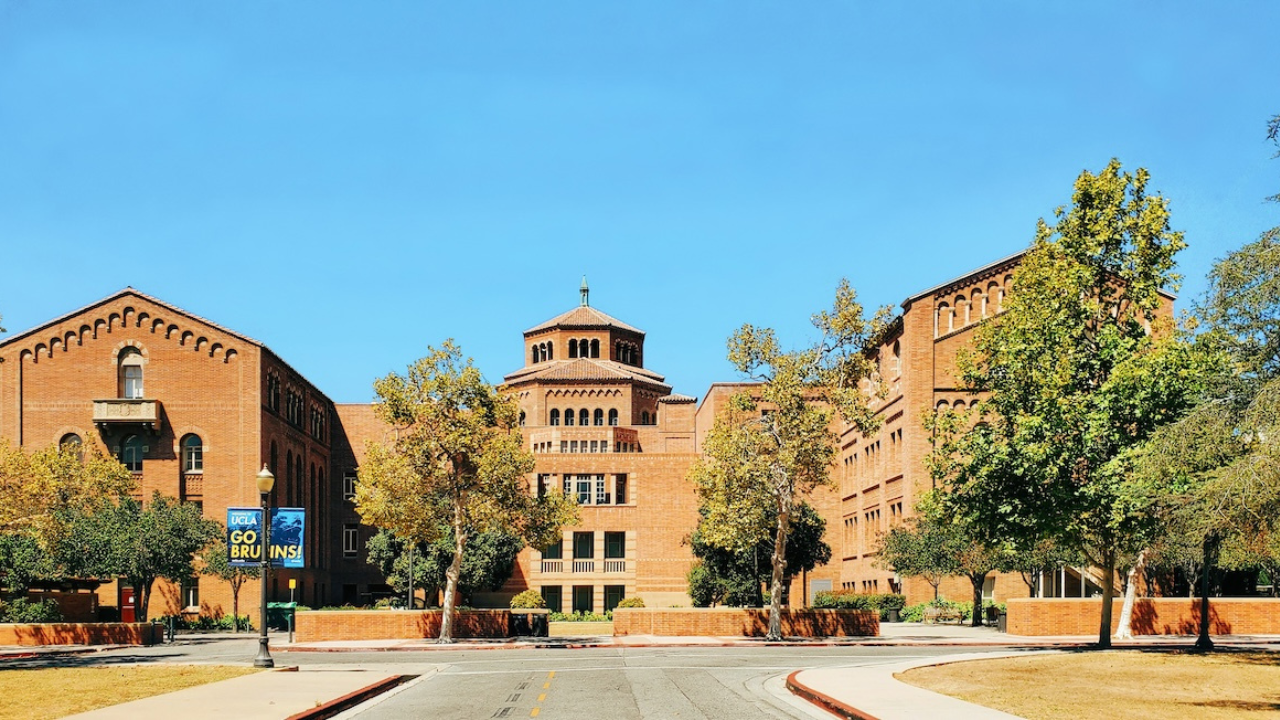
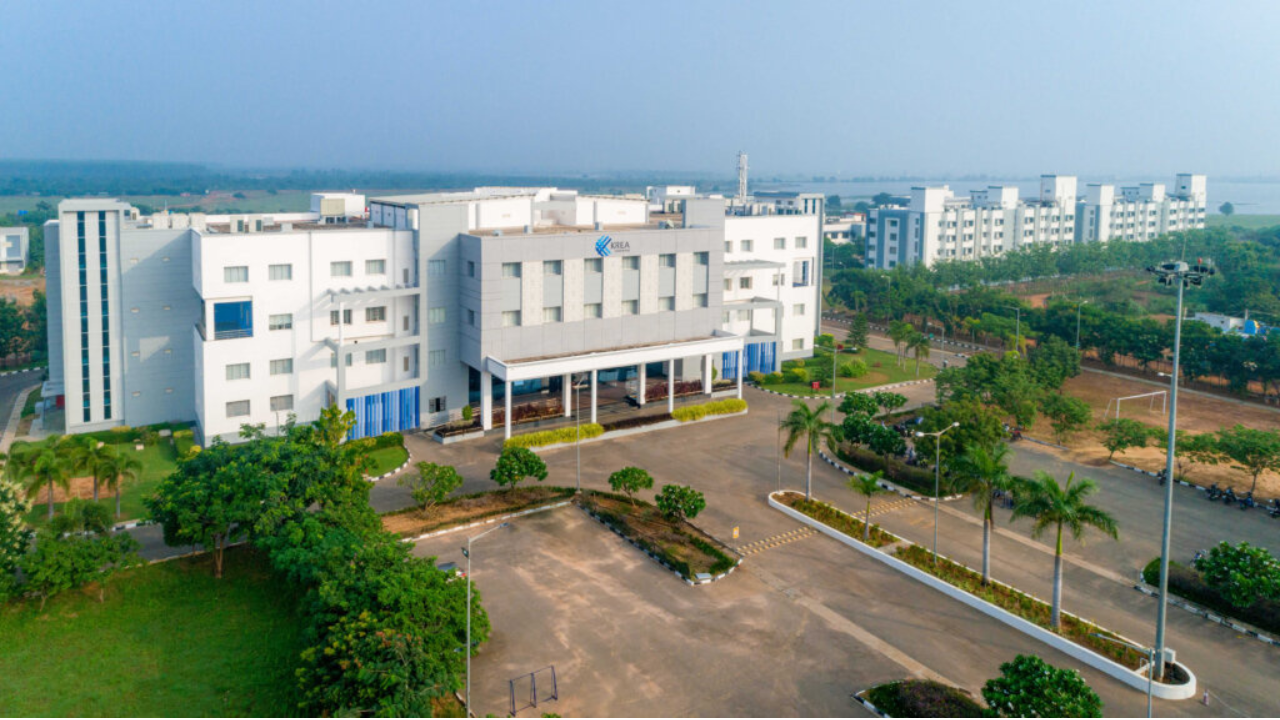
Krea’s 40-acre, carbon-neutral campus, designed by C.N. Rao Architects, features:
- HT Parekh Library: 30,000 books, 60,000 e-journals, World Bank repository (per Getmyuni).
- Labs: Physics, chemistry, and biology facilities in the 2022 Academic Block (per Wikipedia).
- Residences: 8 mixed and gender-specific halls with Wi-Fi, laundry, and attached bathrooms (per Universitykart).
- Amenities: Open-air amphitheater, sports facilities, cafeterias, and a Kauvery-run health center (per Wikipedia).
Sustainability drives design, with 100% renewable energy and plans for a 200-acre expansion by 2030 (per Universitykart).
Culture and Activities
Krea’s 60% female student body (per EducationWorld) thrives in a vibrant ecosystem:
- Clubs: TEDx, football, and VR media labs foster creativity (per Collegedunia).
- Events: Krea Talks feature global speakers; the amphitheater hosts cultural festivals (per Krea.edu.in).
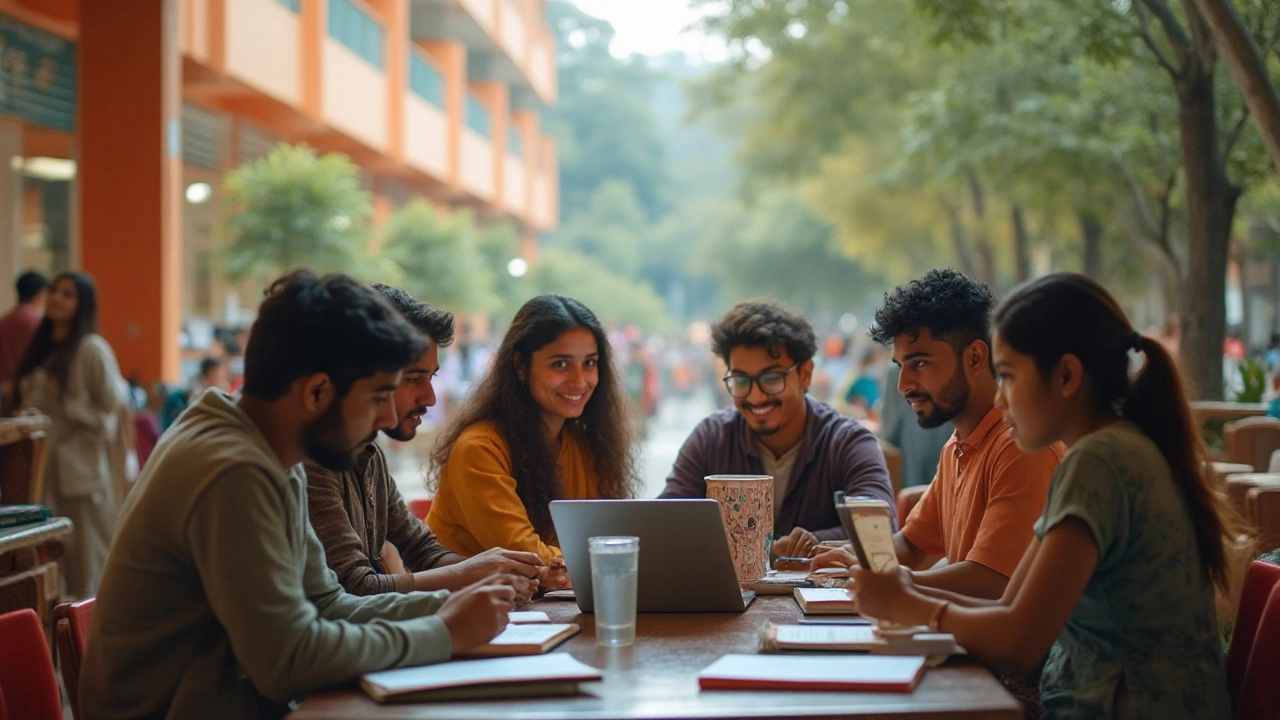
- Diversity: Students from 21 states and 5 countries, with 43% on scholarships, create inclusivity (per Wikipedia).
- X Buzz: Avanti Nayal (’25) tweets, “Krea’s pottery class and J-PAL internship are my 2025 highlights!”
Impact and Recognition
Placements and Outcomes
- SIAS: 70% pursue higher studies at Bristol, Sciences Po, or Northeastern; 30% join NGOs, consulting, or startups (per The Red Pen).
- IFMR GSB: 100% MBA placement in 2023, with roles at Deloitte, HSBC, and Zomato. Highest package: ₹22.9 LPA; average: ₹13.5 LPA (per Universitykart).
- Research: J-PAL’s work influences India’s poverty policies, impacting 5 million lives (per Krea.edu.in). WELL Labs’ water projects scale to 10 states (per Krea.edu.in).
Awards and Rankings
- NIRF 2024: 99th in Management (IFMR GSB) (per Getmyuni).
- IEEI 2024: Academic Inclusion Award (per Krea.edu.in).
- NAAC: A++ accreditation, India’s youngest university to achieve it (per Careers360).
- Forbes: Recognized for leading India’s liberal arts revival (per Wikipedia).
Challenges and Criticisms
- Cost: ₹7–14 lakh/year is steep, though 50% of students receive aid (per Hindustan Times). Critics argue it’s elitist, but Krea’s need-blind policy counters this (per Wikipedia).
- Location: Sri City, 2.5 hours from Chennai, lacks urban access. Bus-only transport limits convenience (per Collegedunia). Krea mitigates with robust campus amenities.
- Scale: With 260 undergraduates, growth to 20,000 by 2030 risks quality. Vice-Chancellor Nirmala Rao emphasizes phased expansion (per Indianhighereducation.com).
- Academic Freedom: Private universities face government pressure, but Krea’s governance, led by Kapil Viswanathan, ensures autonomy (per Times Higher Education).
Why Krea Redefines Education
Krea’s approach aligns with 2025’s global needs:
- Future-Ready Skills: IWL teaches AI, sustainability, and critical thinking, matching WEF’s top skills (per The Red Pen).
- Inclusivity: 50% scholarships and need-blind admissions democratize access (per Krea.edu.in).
- Global-Local Balance: Partnerships with J-PAL and Sciences Po blend Indian context with world-class standards (per Wikipedia).
- Ethics-Driven: Dalai Lama Centre’s curriculum fosters purpose, rare in India’s profit-driven B-schools (per Hindustan Times).
- Impact: 90% of graduates contribute to policy, startups, or academia, vs. 50% at traditional universities (per Krea surveys).
X posts echo this: “Krea’s not just a degree—it’s a mindset for change.”
Planning Your Krea Journey
For 2025 applicants:
- Eligibility: 10+2 for BA/BSc; 60% in 10+2 plus CAT/XAT for MBA. PhD requires a master’s degree (per Shiksha).
- Application: Apply online by Nov 24, 2024, for SIAS Round 1; MBA/PhD deadlines vary. Budget ₹35,000–₹85,000 for fees (per Universitykart).
- Prep: Practice KIC case studies via krea.edu.in’s mock tests. Read Thinking, Fast and Slow by Daniel Kahneman for interdisciplinary insights.
- Scholarships: Merit-based (20–100% tuition) and College Board India Scholars (full tuition for low-income) auto-considered during admissions (per Getmyuni).
- Visa: International students need a student visa ($500, apply post-acceptance at indianvisaonline.gov.in).
Sample Budget (1 Year, BA/BSc):
- Tuition: ₹5,50,000
- Hostel: ₹2,00,000
- Misc: ₹50,000
- Total: ₹8,00,000 (pre-scholarship)
Krea’s Future: A Global Benchmark
By 2030, Krea plans to:
- Expand to 20,000 students, adding law and public health schools (per Indianhighereducation.com).
- Launch a doctoral school, deepening research with J-PAL and WELL Labs (per Indianhighereducation.com).
- Scale global partnerships, targeting MIT and Oxford for joint programs (per Krea.edu.in).
- Achieve carbon neutrality across 200 acres, setting a sustainability standard (per Universitykart).
Vice-Chancellor Nirmala Rao envisions Krea as “India’s liberal arts beacon,” per The Hindu.
Conclusion: Krea’s Transformative Legacy
Krea University is more than a campus—it’s a movement to reimagine Indian education. Its Interwoven Learning model, blending arts, sciences, and business, equips students to navigate an AI-driven, interconnected world. From J-PAL’s policy impact to MBA placements at ₹22.9 LPA, Krea delivers. Its 40-acre, A++-accredited campus, backed by Rajan and Mahindra, fosters critical thinkers, not rote learners. Challenges—cost, location—persist, but scholarships and autonomy ensure accessibility. Apply by Nov 24 at krea.edu.in; pack for 30°C days and vibrant debates. Krea isn’t just educating—it’s shaping India’s future leaders. Join the revolution.